
Oral and maxillofacial surgery
From wisdom tooth removal to facial cosmetic surgery and implants.

In chargeSantiago Palacio · Oral and maxillofacial surgery
Format
Outpatient in most cases
Anesthesia
Local or sedation, depending on complexity
Recovery
A few days to several weeks
Maxillofacial surgery covers everything from wisdom tooth removal to more complex procedures: implant placement, impacted teeth and correction of congenital facial disproportion.
It’s the next step when a restorative treatment, such as a prosthesis or a simple implant, is no longer enough: for example, when there isn’t enough bone, when a tooth is impacted under the gum, or when the problem is structural rather than a single tooth.
What it includes
- Evaluation with diagnostic imaging: a panoramic X-ray or CT scan, depending on the case.
- Surgical planning specific to the procedure.
- Surgery under local anesthesia or sedation, depending on complexity.
- Post-op follow-up with the same surgeon.
When does it make sense?
Wisdom teeth that cause recurring pain or infections, teeth that never came in properly, or cases where a prosthesis or simple implant isn’t possible due to a lack of bone or supporting structure. In all of these cases, an evaluation with imaging is the first step before deciding on the type of surgery.
“When restorative treatment is no longer enough.”
When do you need a maxillofacial surgery evaluation?
Wisdom teeth with recurring pain or infections
Wisdom teeth that cause repeated discomfort.
Teeth that never came in properly
Teeth impacted under the gum or bone.
A simple prosthesis or implant isn't possible
Not enough bone or supporting structure for a simple restorative treatment.
Treatment options
Wisdom tooth removal
Extraction of wisdom teeth, the most common procedure and almost always outpatient.
Implant placement
Surgical planning when the case needs more than a simple prosthesis.
Impacted teeth
Teeth that couldn't erupt properly and stay trapped under the gum or bone.
Facial disproportion correction
Structural cases that go beyond a single tooth.
Frequently asked questions
Is it outpatient surgery?
Most procedures, like wisdom teeth and implants, are outpatient, with local anesthesia or sedation depending on the case.
How much recovery time will I need?
For simple extractions, a few days. For more complex surgeries, it can take several weeks.
Do I need tests beforehand?
Yes, usually a panoramic X-ray or a CT scan to plan the surgery.
Does the surgeon do the follow-up?
Yes, the same surgeon handles your post-op check-ups.
Other services you may be interested in
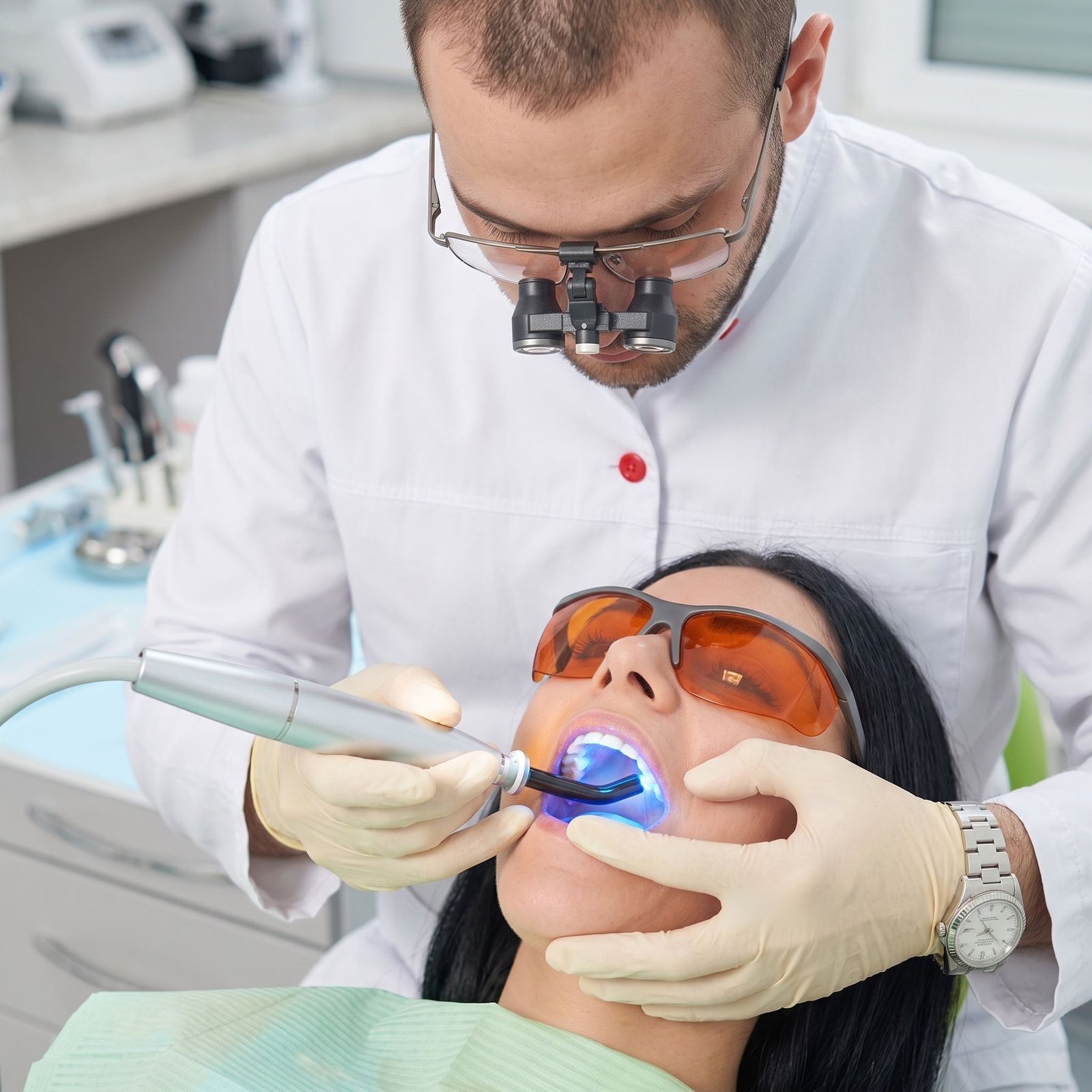
Teeth whitening
Lightens your teeth and removes built-up stains and discoloration without touching the tooth's structure.
See details
Smile design
Veneers, contouring and whitening combined for a more balanced, natural-looking smile.
See details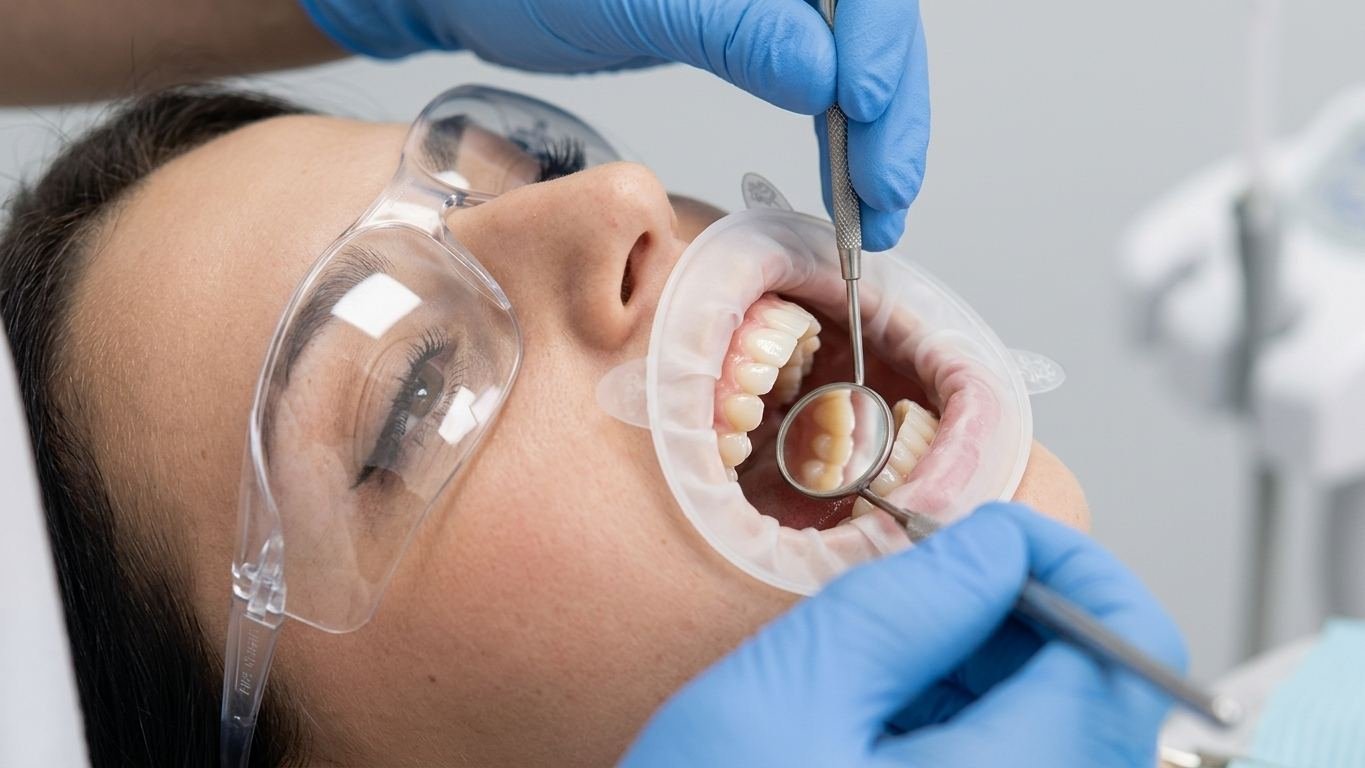
Endodontics
Root canal treatment to save the tooth instead of extracting it.
See detailsReady to book your oral and maxillofacial surgery?
Payment plans available, plus special prices for Coomeva and Protección members.